Maternity Photoshoot Ideas That Actually Look High-End


There's a moment during almost every maternity consultation where a client pulls out their phone and starts scrolling. Nine times out of ten, the images are the same: a flowing white dress, golden hour light, hands cradling a bump in a field somewhere. Beautiful? Sure. But when every third maternity photographer in your city is producing the same image, "beautiful" starts to feel a little invisible.
The truth is, high-end maternity photography isn't really about ideas. It's about execution. The same pose, the same dress, the same location can look ordinary in one photographer's hands and genuinely stunning in another's — and the difference almost always comes down to how light, composition, and direction are working together.
This guide breaks down seven maternity photoshoot ideas from a working studio perspective, with a focus on the craft decisions behind them — not just what they look like, but why they work.
What Actually Makes a Maternity Photo Look Expensive
Before getting into specific ideas, it helps to understand what separates a high-end image from a generic one. It's rarely the dress. It's rarely the location. More often, it comes down to a handful of technical decisions:
Light direction. Flat, even lighting is forgiving, but it's also dimensionless. The moment you introduce an angle — light coming from the side, from above, from slightly behind — the body gains shape. Shadows become an asset rather than something to eliminate.
Background simplicity. Busy backgrounds compete with the subject. A clean backdrop, whether that's a cyclorama wall, a simple outdoor surface, or even a dark studio environment, forces the eye to land exactly where you want it.
Pose structure. The difference between a pose that reads as powerful and one that reads as awkward usually comes down to weight distribution and what the arms are doing. Small adjustments — a slight turn of the torso, a shift of the hip, creating negative space around the body — change everything.
Fabric behavior. The way fabric moves and falls in an image either reinforces the composition or fights it. This is why wardrobe choices matter far beyond aesthetics: the right fabric catches light, holds shape, and adds a visual layer that elevates the entire frame.
When these elements are working together, a simple studio setup can produce images that look like they belong in a fashion magazine. When they're not, even an expensive location and a stunning gown won't save the photo.
Idea 1: Directional Studio Lighting That Sculpts
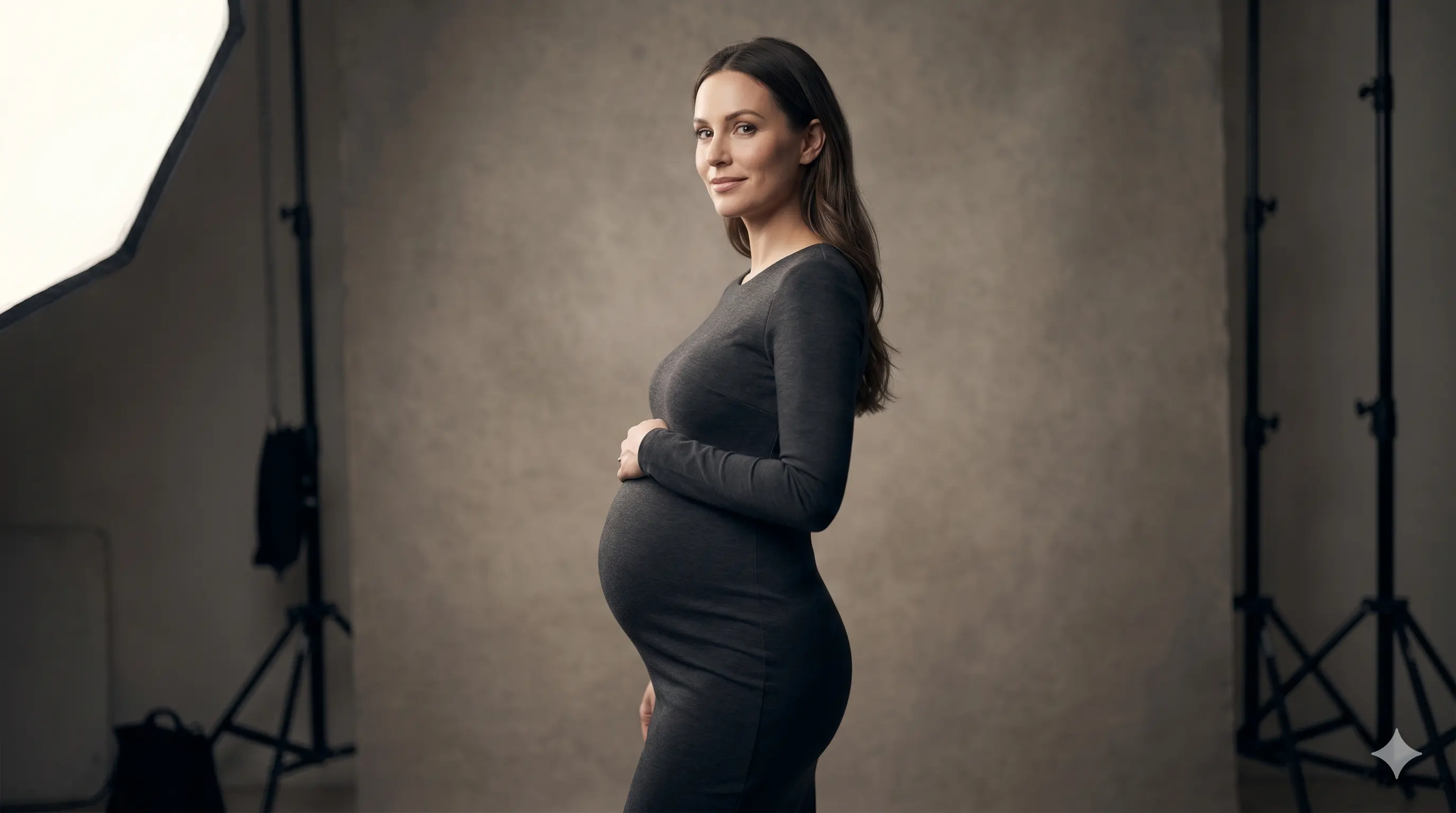
If there's one technique that immediately signals editorial maternity work, it's this one. Instead of lighting the subject evenly, place your main light at a significant angle — roughly 45 degrees to the side and slightly elevated — so that it wraps around the body and creates genuine shadow on the opposite side.

The effect is transformative. The pregnant silhouette, which is naturally dramatic, becomes even more defined. The body looks three-dimensional rather than flat.
Add a rim light from behind and you get separation from the background, which gives the image depth even on a completely plain backdrop. The result is something that reads as intentional — like every element of the frame was placed there on purpose, because it was.
This is the foundation of most luxury studio maternity work, and it's worth mastering before anything else.
Idea 2: Controlled Fabric Movement
Movement in photography is usually associated with outdoor shoots — wind in a field, a dress caught mid-spin. But controlled fabric movement inside a studio can be even more striking, precisely because it feels deliberate.

Long chiffon gowns, fabric extensions, and layered dresses with trained hems are ideal for this. The key is direction: instead of letting the fabric do whatever it wants, shape it intentionally. Have your client hold a gathered section and release it on cue. Use a handheld fan positioned carefully off-frame. Rehearse the motion so the shot happens at the peak of the arc, not during the chaos of it.
When you get it right, the fabric becomes part of the composition — not a prop, but a structural element that extends the silhouette and draws the eye through the frame. Backlit or rim-lit, the edges of the fabric almost glow.
Idea 3: Minimalist Editorial Portraits
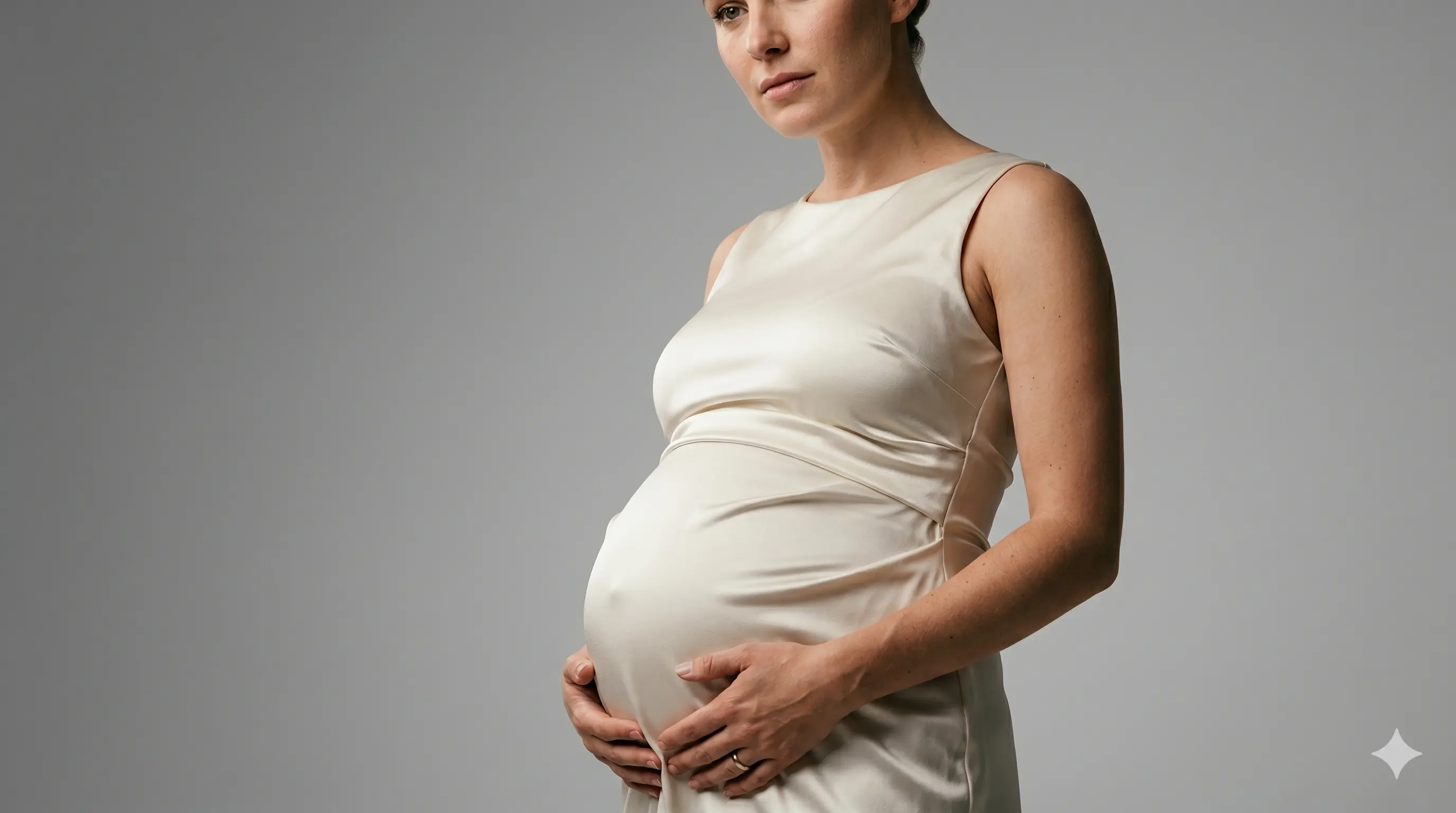
Sometimes the most powerful image is the simplest one. A single subject on a clean background, lit with precision, can produce work that feels more like a fashion editorial than a traditional portrait session — which is exactly the point.

The minimalist approach strips away anything that doesn't contribute to the image. No elaborate props, no styled environments, no busy settings that pull focus. What remains is body shape, expression, and the interplay of light and shadow.
This style rewards technical precision. Because there's nothing else in the frame to look at, the quality of the light has to be immaculate. But when it is, the result is undeniable: images that are clean, timeless, and visually authoritative.
For clients who want something genuinely different from the standard maternity portfolio, this direction is often the most surprising and satisfying.
Idea 4: Cropped Compositions and Intimate Framing
Not every maternity image needs to be a full-length portrait. Some of the most visually compelling work in this genre is tightly framed — close enough that the viewer feels genuinely close to the subject.

Cropped compositions can focus on the hands on the bump, the curve of the belly against a lit background, the detail of fabric at hip level, or a facial expression that gets lost in a wider frame. The shift in perspective changes the emotional register of the image entirely.
The challenge with this approach is that tight framing amplifies every technical detail. Lighting inconsistency, slight softness in focus, uneven skin texture — all of it becomes more visible. But when the technical execution is there, cropped portraits are often the images clients respond to most strongly. They're intimate in a way that a wide shot simply can't be.
Idea 5: Using Shadow as a Compositional Tool
The instinct in portrait photography is often to minimize shadows — to make sure the subject is well-lit, evenly exposed, clean. High-end maternity work often does the opposite.
Deliberate shadow adds depth and dimension that even lighting can't replicate. A strong shadow cast across the background separates the subject from it and creates a visual layer that makes the image feel three-dimensional. Shadow along the side of the body reinforces the silhouette and gives it weight.
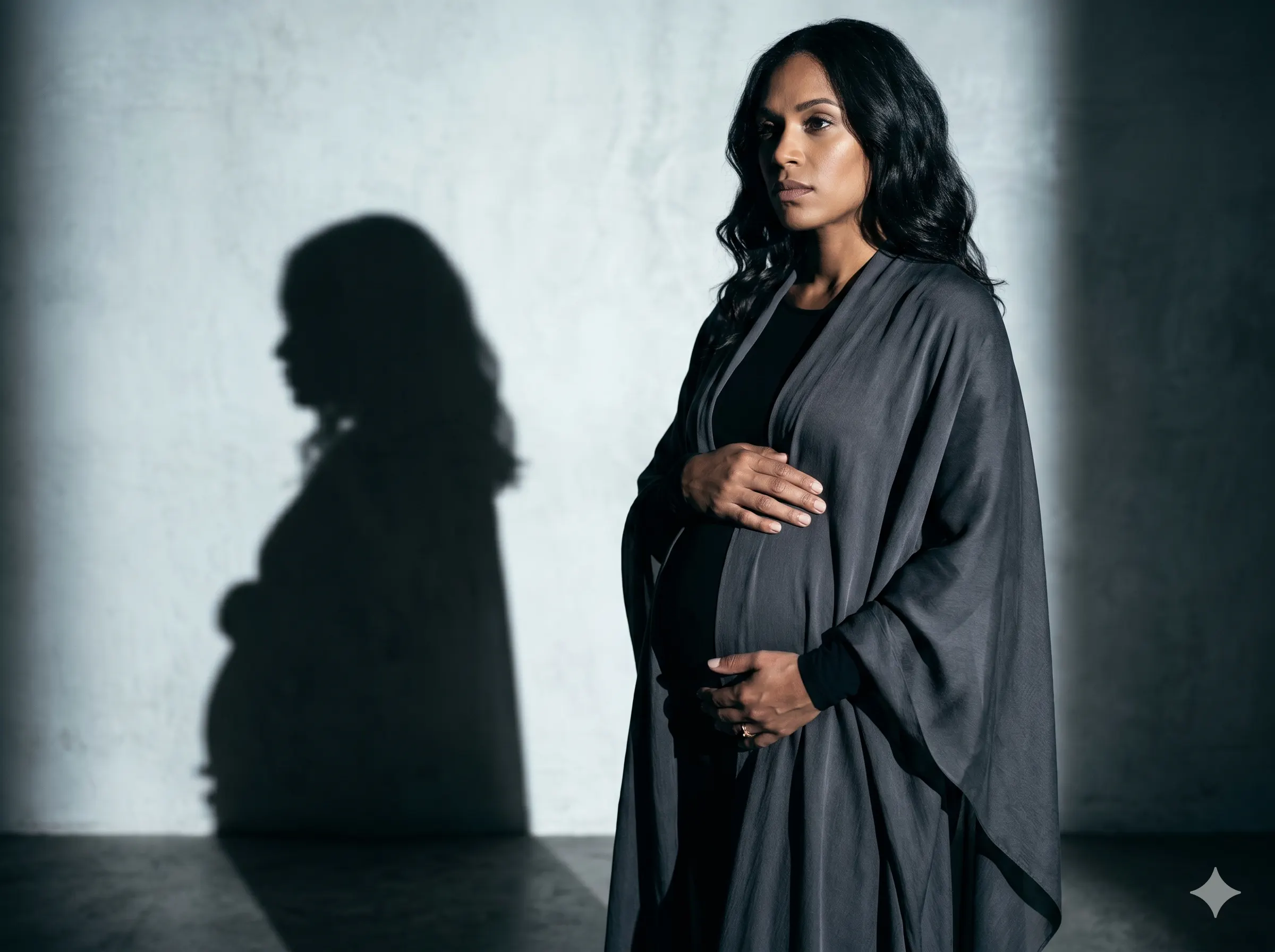
The difference between shadow that looks intentional and shadow that looks like a lighting mistake is control. When the placement is precise — when you can see that the shadow was put there on purpose — it reads as sophisticated. When it's accidental, it just looks underlit.
For clients who are open to something more dramatic, this approach can produce images that are genuinely unlike anything else in the maternity photography market.
Idea 6: Strong Lines and Sculptural Posing
High-end posing in maternity photography isn't about putting the client through a sequence of complicated or acrobatic positions. It's about finding clarity of shape — and then refining it until the image looks inevitable.
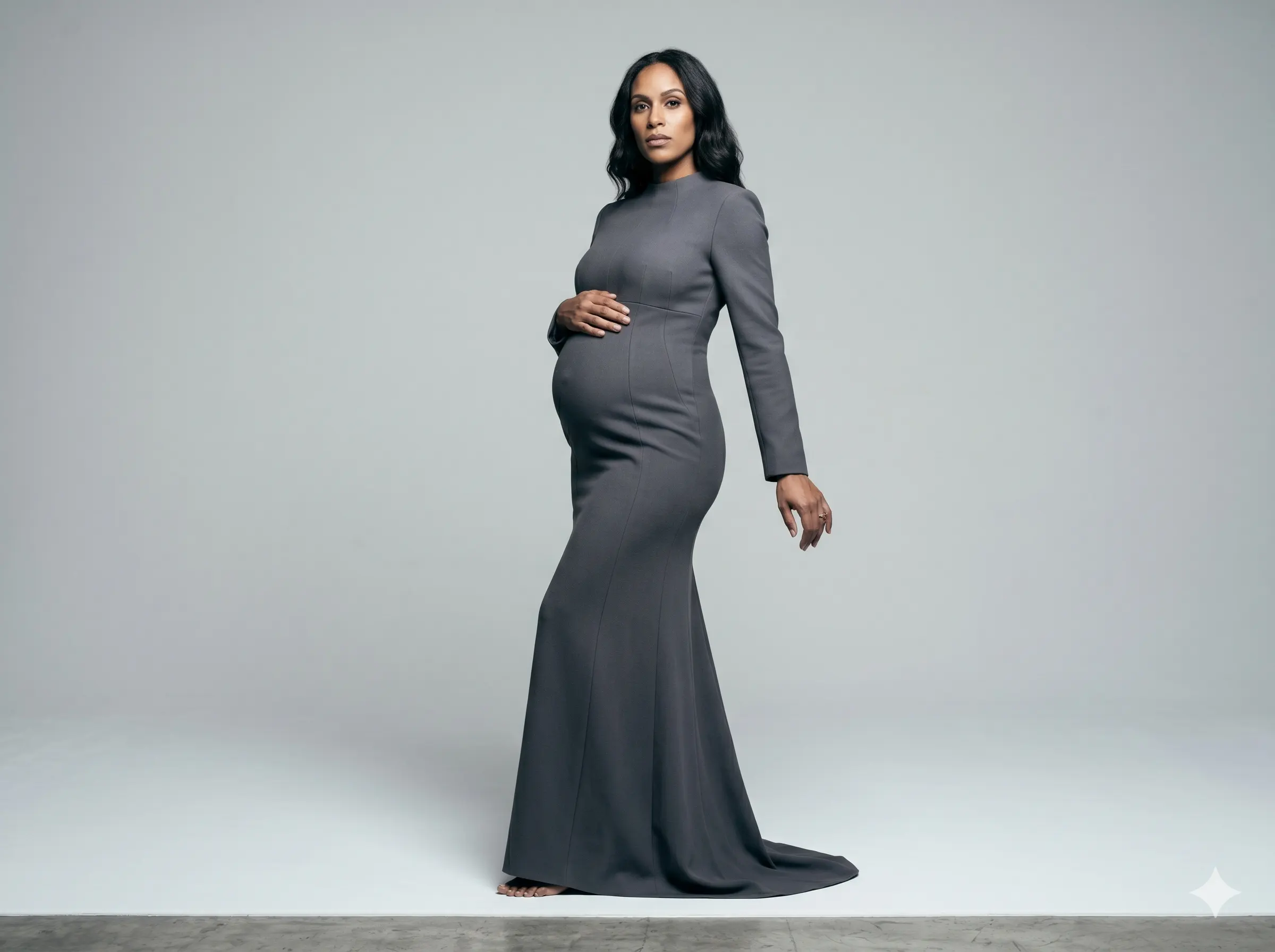
A simple standing pose becomes powerful when the body is angled slightly to the camera, weight settled into one hip, arms creating deliberate negative space rather than hanging flat against the sides. The bump reads as the visual anchor of the frame. Everything else supports it.
The direction behind this kind of posing is subtle but continuous: small adjustments throughout the shoot, watching how the body reads through the lens rather than with the naked eye, understanding that a two-degree shift in shoulder angle can completely change how an image feels.
The goal isn't complexity. It's precision.
Idea 7: Fabric-Driven Portraits
There are sessions where the wardrobe becomes the primary visual element — where the outfit isn't just something the client is wearing but the thing the image is about. When this works, the result is closer to fashion photography than traditional portraiture.

This approach requires a specific kind of fabric: something with genuine movement potential, interesting texture, or both. A heavily structured gown can work if the lighting catches the material correctly. A draped chiffon piece with a long train offers a different kind of visual interest — all flow and transparency.
The composition for this style is typically wider, allowing the full shape of the garment to read. Lighting is placed to reveal texture and edge rather than to simply illuminate the face. And because the garment is doing a lot of the work, the posing can be more minimal — a clean stance, a neutral expression, a stillness that lets the fabric hold the viewer's attention.
Why Execution Matters More Than Inspiration
Most maternity photography inspiration online focuses on surface details: the dress, the location, the general vibe. What's rarely discussed is the craft behind the image — the lighting decisions, the posing adjustments, the wardrobe choices that weren't random but deliberate.
This is why two photographers can approach the same idea and produce completely different results. The concept is just the starting point. Everything that follows — how the light is shaped, how the client is directed, how the frame is composed — is where the image is actually made.
High-end maternity photography isn't about having more ideas. It's about bringing more intention to the ideas you already have.
Looking for more on the technical side of maternity photography? See the full guide to color and lighting choices for studio maternity sessions and posing for a more flattering silhouette.